
The Cabinet Was Built for the Realities of 2024
When the current Council of Ministers was constituted after the 2024 Lok Sabha election, the political atmosphere was very different. The BJP emerged as the single largest party but fell short of an outright majority. The National Democratic Alliance returned to power, but the immediate challenge was stability. Coalition management, alliance coordination and continuity were the dominant priorities. The Cabinet reflected those realities. It was designed for the political environment that existed immediately after the 2024 election. Two years later, the political landscape appears significantly different.
A Government That Looks More Confident
In the weeks following the 2024 election, many political commentators predicted that coalition constraints would significantly limit the government's room for maneuver. However, subsequent developments have altered that perception. The NDA government has remained stable. The BJP has demonstrated resilience in subsequent political contests. The opposition has struggled to maintain a unified national narrative. As a result, the political confidence visible today appears markedly different from the atmosphere that prevailed immediately after the Lok Sabha election. If a reshuffle occurs now, it may reflect that changing reality.
Beyond a Cabinet Reshuffle: Is the BJP Preparing for the Next Political Battlefield?
The resignation of Union Minister George Kurian following the completion of his Rajya Sabha term has fueled speculation about an impending Union Cabinet reshuffle.
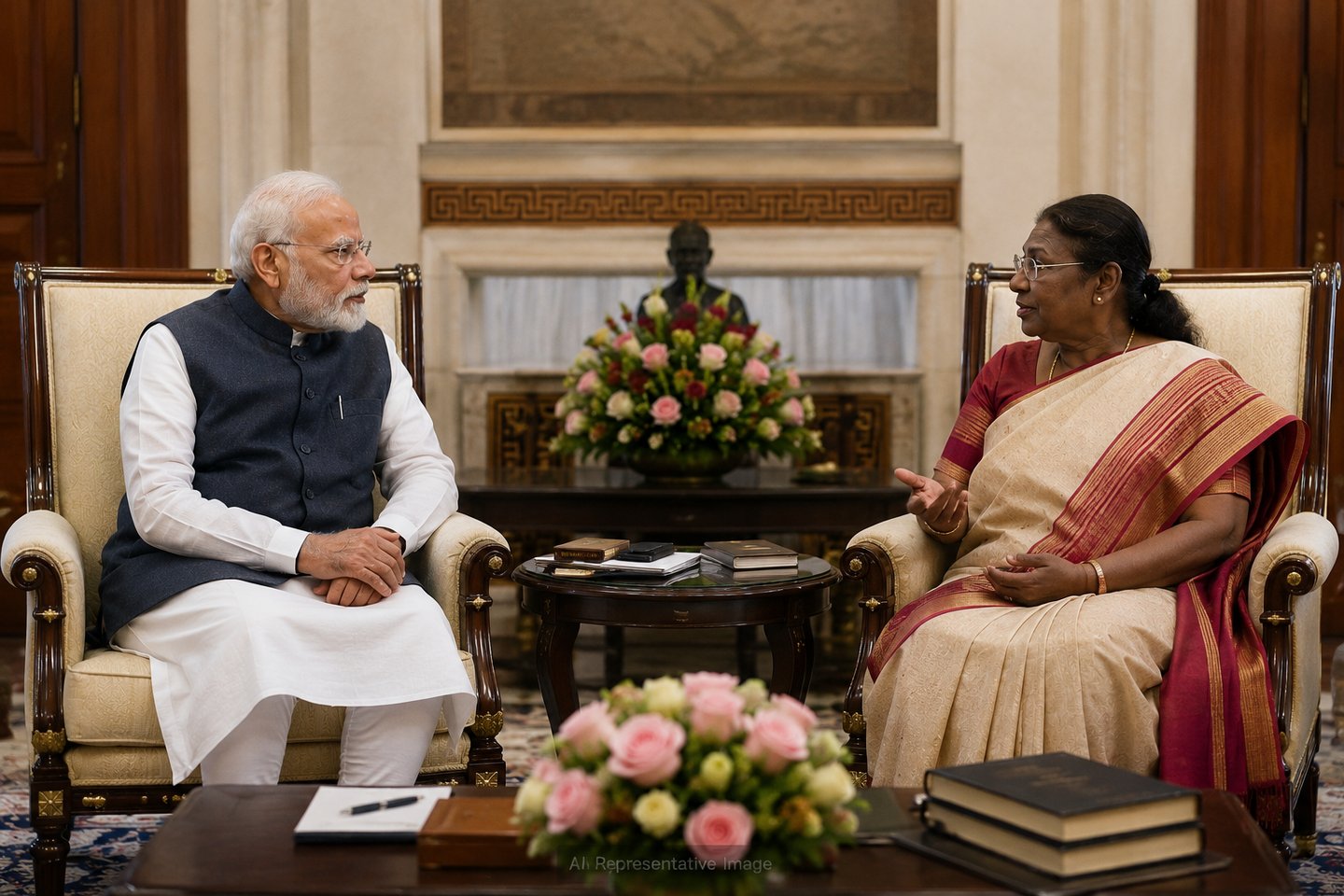
Reports of Prime Minister Narendra Modi's meeting with President Droupadi Murmu and growing discussions in political circles have only intensified expectations that changes may be on the horizon.
Yet focusing exclusively on who enters or exits the Cabinet may miss the larger political story. The more important question is whether the Bharatiya Janata Party is preparing its political machinery for the next phase of electoral and organizational expansion.
As speculation grows over a possible Cabinet reshuffle, the bigger story may not be who enters or exits the government, but how the BJP is positioning itself for the next phase of electoral and organizational expansion.
By Abhinav Mudaliar
Chief Analyst, The Centre
24 June 2026 • 03:45 PM IST • 5min read
Not Every Exit Is a Demotion
Political analysis often assumes that losing a ministerial position automatically means a reduction in influence. Indian politics frequently works differently.
For a party pursuing expansion in strategically important states, a full-time political organizer may be more valuable than a minister operating from Delhi.
This possibility becomes relevant when examining leaders such as George Kurian in Kerala. For years, Kerala has remained one of the BJP's most challenging electoral frontiers. The party has steadily increased its presence but still seeks a larger breakthrough.In such a scenario, leaders with strong regional networks and community outreach capabilities may be considered more valuable on the political ground than within the Union Cabinet. The same logic can apply in other states where future electoral battles are expected to intensify.
.
Uttar Pradesh: The State Everyone Will Be Watching
If there is one state that could heavily influence the shape of any reshuffle, it is Uttar Pradesh. With 80 Lok Sabha seats, Uttar Pradesh remains the single most important state in national politics. Any future delimitation exercise could increase its parliamentary significance even further. The next Uttar Pradesh Assembly election is approaching, and every major political party understands its importance. Because of this, observers will closely watch whether the reshuffle introduces new faces from Uttar Pradesh or elevates leaders with strong political influence in the state. Political parties often use Cabinet appointments not only to reward performance but also to signal future priorities. Representation, regional balance, organizational messaging and electoral preparation frequently play a role. The names may matter. But the broader pattern may matter even more.
Governance and Politics Often Intersect
Another factor political observers will watch is whether ministries facing sustained public scrutiny witness leadership changes. Education is one area that has experienced significant public debate in recent years, particularly regarding competitive examinations and administrative controversies. Governments often use reshuffles to signal fresh energy and renewed focus in sectors facing heightened public attention. Whether such changes occur remains uncertain. Predicting specific decisions within the Modi government has historically been a difficult exercise. The Prime Minister has frequently demonstrated a willingness to make unexpected choices that confound political speculation.
A Map of Future Political Priorities
If a reshuffle occurs, the most revealing question will not be who leaves. It will be who enters. Observers should watch for:
Increased representation from politically strategic states.
Greater emphasis on southern India.
New faces from emerging electoral battlegrounds.
Leaders known for organizational work rather than administrative roles.
Appointments that indicate preparation for future Assembly elections.
The resulting Cabinet may reveal where the BJP believes its next political battles will be fought.
Beyond Events, Into Causes
A minister's resignation is an event. A Cabinet reshuffle is an event. The deeper story lies in understanding what those events reveal about the political calculations behind them. The current Cabinet reflected the realities of 2024. A future Cabinet may reflect the ambitions of 2026 and beyond. If that happens, the reshuffle will not merely be an administrative exercise. It will be a political roadmap. And the most important clues may come not from the ministries themselves, but from the states, communities and electoral battlegrounds that the new appointments are designed to influence.