
That is the visible story. The invisible story is far more significant. Across Asia, the strategic chessboard is being rearranged. And India and Japan are quietly moving their pieces. Not because they wish to change the balance of power, but because the balance of power is already changing around them.
Every Crisis Has Taught the Same Lesson
No single event transformed Japan's strategic thinking. It was a succession of shocks. China's relentless military modernization and unprecedented naval expansion. Russia's invasion of Ukraine, which shattered assumptions that major conventional wars belonged to history. The conflicts in West Asia, exposing how a single maritime chokepoint can send tremors through global energy markets. Each crisis chipped away at an old belief—that globalization alone could guarantee stability. It cannot.
In today's world, economic security is national security. Technology is national security. Supply chains are national security. And increasingly, manufacturing capability is national security.
Military Power Has Limits. Geography Doesn't.
Recent conflicts have reinforced a reality that many strategic planners have understood for decades. Military superiority remains indispensable. But military superiority alone cannot eliminate geography. The Strait of Hormuz reminded the world that a narrow stretch of water can influence global oil prices more effectively than thousands of missiles.
Ukraine reminded Europe that industrial capacity often determines how long a nation can sustain a conflict. China's growing naval presence is reminding the Indo-Pacific that control over sea lanes is no longer a theoretical concern. Modern geopolitics is no longer won solely by armies. It is won by resilience.
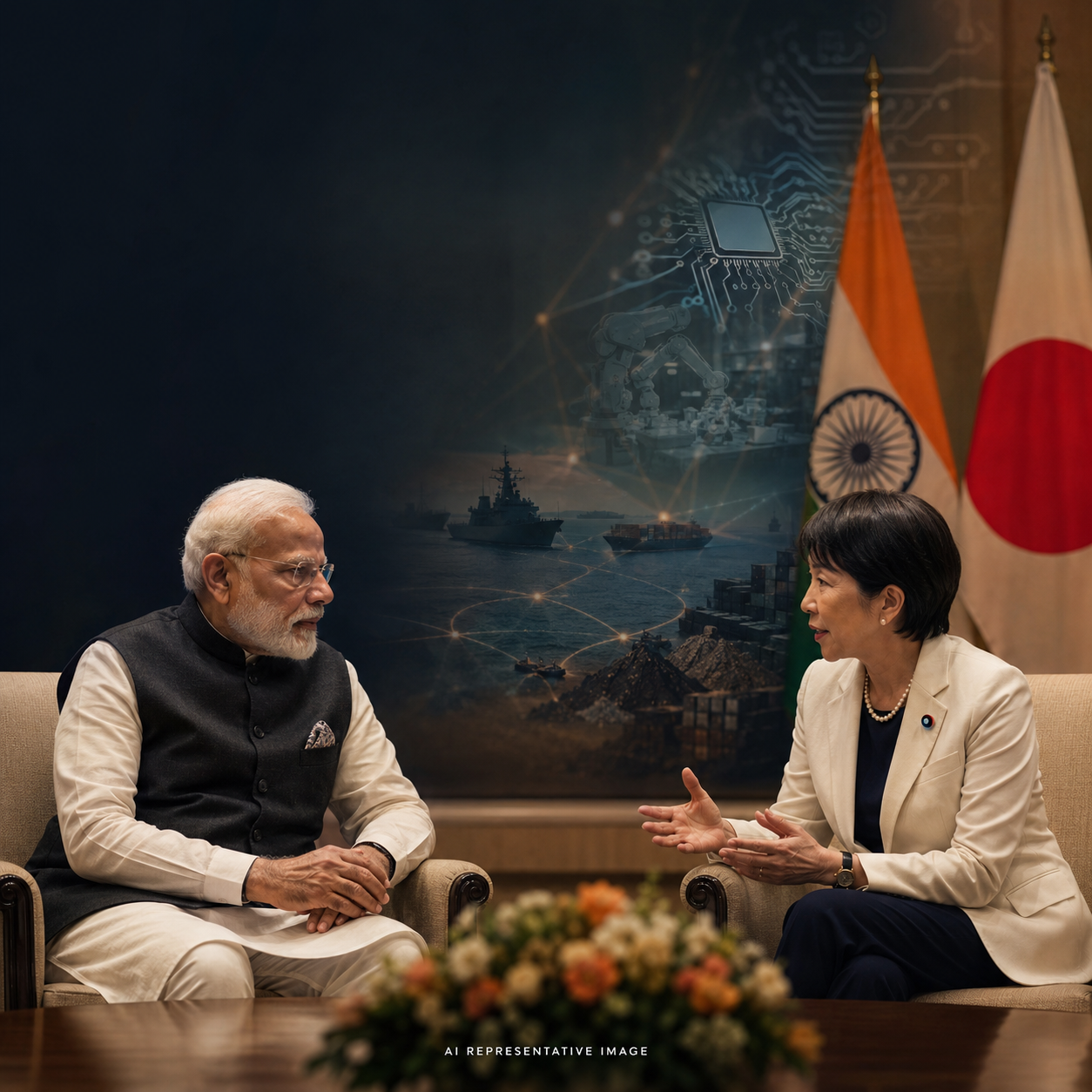
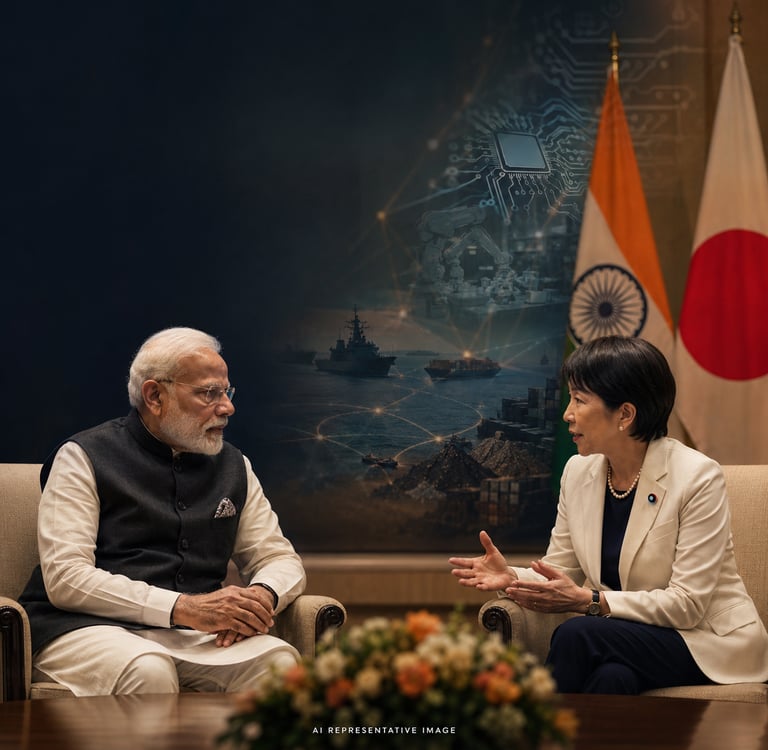
History has a peculiar habit. It rarely announces the birth of a new geopolitical order. It whispers through diplomatic visits, trade agreements and defence partnerships. Until one day, everyone realizes the world has changed.
Japanese Prime Minister's visit to India will be reported as another summit between two friendly democracies. Headlines will focus on investment, semiconductors, artificial intelligence, clean energy and trade.
Industrial excellence refined over decades. This is not a relationship where one country gives and the other receives.It is a partnership built on complementarity. Japan has the technology. India has the scale. Japan has precision. India has capacity. Japan brings innovation. India brings execution. Few bilateral relationships in Asia possess such natural strategic alignment.
The China Factor Cannot Be Ignored
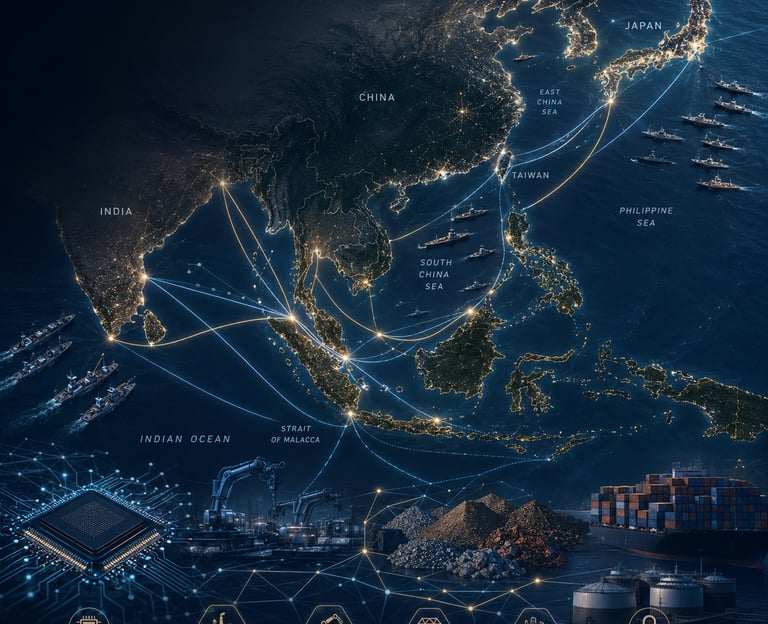
Diplomacy often avoids naming the elephant in the room. Strategy does not. China's rapidly expanding naval capabilities and growing influence across the Indo-Pacific have fundamentally altered regional security calculations. Neither India nor Japan seeks confrontation. But both understand preparation. For both nations, maritime security, resilient supply chains, technological leadership and defence cooperation are no longer optional policy choices. They are strategic necessities.
A Partnership That Could Shape Asia
For decades, India and Japan were partners by choice. Increasingly, they are becoming partners by necessity. If the two democracies continue deepening cooperation in defence manufacturing, semiconductors, artificial intelligence, critical minerals, maritime security and advanced technology, they have the potential to emerge as one of the Indo-Pacific's defining strategic partnerships. Not because they seek conflict. But because history increasingly rewards nations that prepare before circumstances force them to.
Conclusion
Power in the 21st century will not belong exclusively to the country with the biggest military. It will belong to those who can combine technology, manufacturing, resilient supply chains, trusted partnerships and strategic geography into one coherent national strategy.
The visit of Japan's Prime Minister to India is, therefore, much more than another diplomatic engagement. It is another chapter in the quiet construction of a new Asian balance of power. The headlines may describe it as trade. History may remember it as strategy.
China's expanding naval reach, the wars in Ukraine and West Asia, fragile global supply chains, and an increasingly uncertain geopolitical order are pushing India and Japan closer than ever before. This is no longer merely an economic partnership, it is becoming a strategic necessity.
By Abhinav Mudaliar
Chief Analyst, The Centre
03 July 2026 • 11:50 AM IST • 9 min read
Japan's Strategic Transformation Is Already Underway
Japan's post-war identity was built upon economic strength under the protection of a robust alliance. That era is evolving. Tokyo has increased defence spending, revised its national security strategy, invested in counter-strike capabilities and expanded defence partnerships across the Indo-Pacific.
This is not a reaction to one crisis. It is an acknowledgement that the world has fundamentally changed. Japan is not abandoning old partnerships. It is strengthening itself while building new ones.
Why India Matters More Than Ever
Every great strategy eventually confronts one simple question: Who can you build the future with?India offers answers that very few countries can. A rapidly growing manufacturing base.
One of the world's largest pools of engineering talent. Strategic geography overlooking the Indian Ocean. An expanding defence-industrial ecosystem. A large domestic market capable of supporting industrial scale. Japan brings what India seeks. Advanced technology. Precision engineering. Capital.