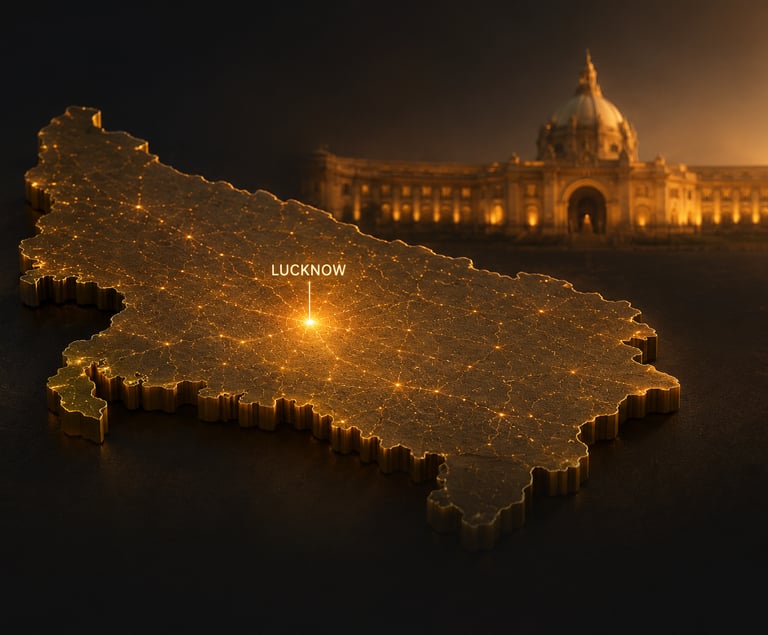
Today, a growing perception exists that the BJP has already done enough to secure another comfortable victory in the 2027 Uttar Pradesh Assembly election. The argument is understandable. The party has governed the state since 2017, Prime Minister Narendra Modi continues to be its biggest national campaigner, and Chief Minister Yogi Adityanath has emerged as one of the BJP's most influential regional leaders. Few chief ministers today command the kind of national campaign appeal that Yogi Adityanath enjoys.
The BJP has also demonstrated an ability to recover from setbacks. After the 2024 Lok Sabha election produced disappointing results for the party in states such as Uttar Pradesh, Haryana and Maharashtra, it returned with strong performances in subsequent Assembly elections in Haryana and Maharashtra. Many observers therefore believe the political momentum has shifted decisively back in the BJP's favour. Yet, none of this automatically means that Akhilesh Yadav should be written off.
More Than a Dynastic Politician
Akhilesh Yadav is frequently described as another product of dynastic politics. While he undoubtedly inherited a political legacy from Mulayam Singh Yadav, reducing his political career to that single fact ignores how it has developed over the past decade.
He has led the Samajwadi Party through defeat, organisational rebuilding and renewed relevance. His public communication has become more measured, his parliamentary interventions more consistent, and his political strategy more disciplined than many critics expected a decade ago. Whether one agrees with his politics or not, he has established himself as the principal opposition leader in Uttar Pradesh.
Living Beyond Mulayam Singh Yadav's Shadow
For many voters, memories of Mulayam Singh Yadav's tenure continue to shape perceptions of the Samajwadi Party. The events surrounding Ayodhya in 1990 remain politically significant and are frequently recalled by the BJP and its supporters. The question, however, is whether Akhilesh Yadav should continue to be judged primarily through the lens of decisions taken by his father's government.
Over nearly a decade in opposition, Akhilesh has sought to project a political identity that differs in tone and style. Whether that effort has succeeded is ultimately for voters to decide, but it represents a noticeable shift in his political positioning.
Much of the political conversation today assumes that the BJP enters the 2027 Uttar Pradesh Assembly election with an overwhelming advantage. While the BJP remains the favourite, dismissing Akhilesh Yadav as an ineffective challenger may overlook how both he and Uttar Pradesh's political landscape have evolved over the past decade.
By Abhinav Mudaliar
Chief Analyst, The Centre
28 June 2026 • 7:45 PM IST • 7 min read
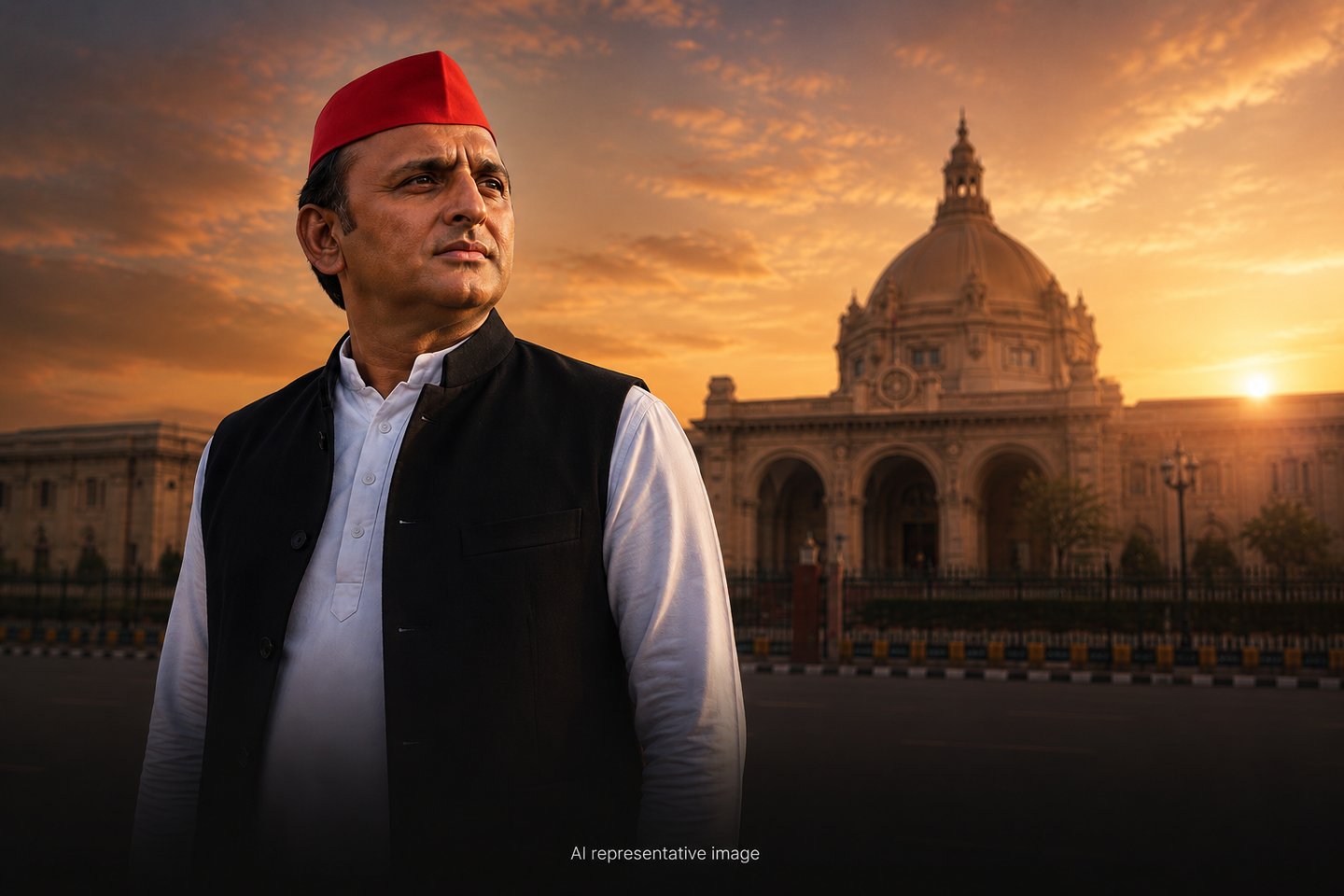
Politics has a habit of surprising those who declare elections over long before the first vote is cast.
A Different Approach to Cultural Politics
One of the more significant developments in Akhilesh Yadav's political evolution has been his engagement with religious and cultural issues.
He has participated in Hindu religious events, including Bara Mangal celebrations, and has commented on issues involving Hindu religious institutions. During debates involving the Shankaracharyas and the Uttar Pradesh government earlier this year, he publicly expressed views that some observers saw as an attempt to broaden his appeal beyond the Samajwadi Party's traditional image.
Similarly, controversies surrounding aspects of the administration and management of the Ram Mandir have become part of the political conversation. While the temple itself enjoys broad public support, opposition parties have sought to distinguish questions about management and transparency from the religious significance of the temple.Whether these issues influence voters remains uncertain, but they illustrate that political debate has moved beyond older binaries.
The PDA Strategy
Akhilesh Yadav has consistently emphasised the PDA formula: Pichhda, Dalit and Alpsankhyak, as the centrepiece of his political strategy. The coalition performed strongly for the Samajwadi Party in the 2024 Lok Sabha election. The larger question is whether that social coalition can be sustained in an Assembly election, where voting patterns and local dynamics often differ from parliamentary contests. That remains one of the biggest political questions heading into 2027.
The BJP's Advantages Remain Significant
None of this diminishes the BJP's strengths. The party possesses perhaps the strongest organisational machinery in Uttar Pradesh. Narendra Modi remains its biggest electoral asset nationally, while Yogi Adityanath's popularity has expanded well beyond the state's borders. The BJP also benefits from a decade of governance experience and an extensive grassroots organisation. These are advantages that no opposition party can ignore.
But Ten Years in Power Brings Its Own Tests
By the time Uttar Pradesh votes again, the BJP will have completed around ten years in office in the state. Long periods in government inevitably bring scrutiny over governance, local administration, candidate performance and constituency-level issues.
Some analysts have argued that part of the BJP's setback in Uttar Pradesh during the 2024 Lok Sabha election reflected local dissatisfaction with individual MPs rather than a wholesale rejection of the party's leadership. Others disagree and point to broader political and social factors. The reasons continue to be debated, but the episode demonstrated that electoral outcomes are influenced by multiple factors rather than a single narrative.
The Road Ahead
The BJP begins the race as the favourite. That much is difficult to dispute. But favourites are not guaranteed winners, and opposition leaders are not rendered irrelevant simply because they face a stronger political opponent.
Akhilesh Yadav still has significant hurdles to overcome. Expanding beyond his traditional support base, strengthening booth-level organisation, maintaining the PDA coalition and presenting a convincing governance alternative will all be crucial.
At the same time, dismissing him as merely another dynastic politician may underestimate both his political evolution and the complexity of Uttar Pradesh's electoral landscape. With nearly a year still to go before the next Assembly election, one conclusion appears reasonable: Akhilesh Yadav remains a serious political player, and any assessment of Uttar Pradesh that ignores him risks overlooking one of the state's most important electoral variables.