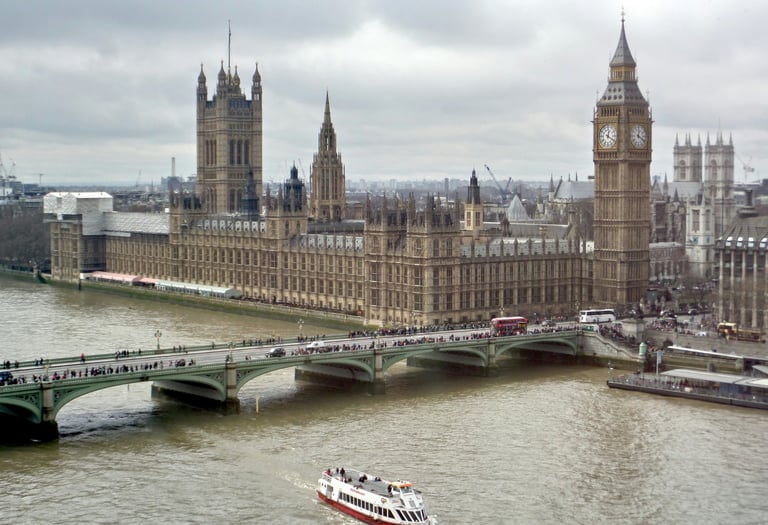
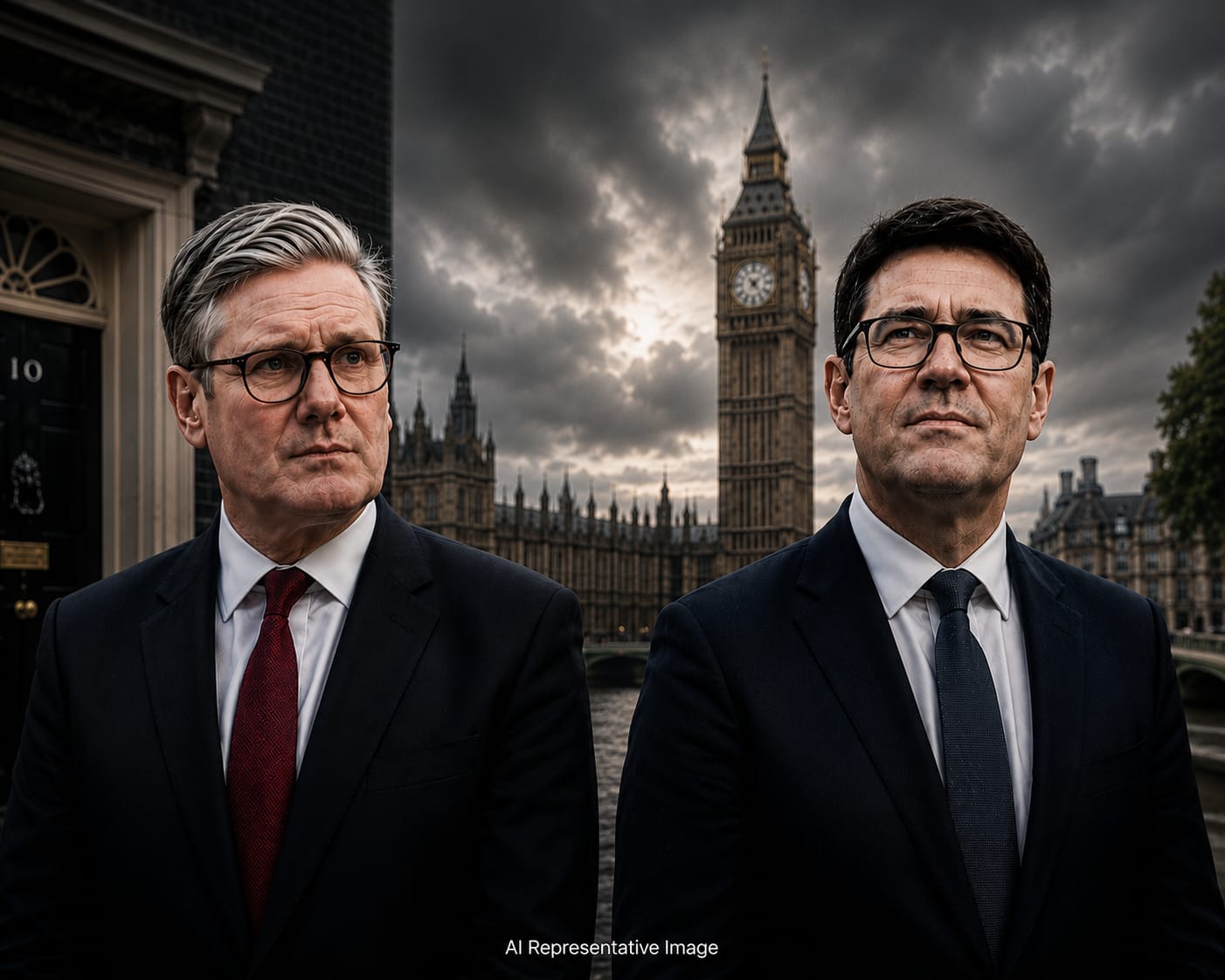
Yet Britain today presents a very different picture. With the resignation of Prime Minister Keir Starmer and the emergence of a new leader, the United Kingdom is preparing to welcome its seventh Prime Minister in roughly a decade. For a country that once symbolized political stability, the question is unavoidable: What happened?
A Tale of Two Britains
Not long ago, British politics was defined by leaders who governed for years. Margaret Thatcher served as Prime Minister from 1979 to 1990. John Major followed from 1990 to 1997. Tony Blair then led the country from 1997 to 2007. Three leaders governed Britain for nearly three decades.
Today, the situation looks dramatically different. Since 2016, Britain has seen:
1. David Cameron
2. Theresa May
3. Boris Johnson
4. Liz Truss
5. Rishi Sunak
6. Keir Starmer
7. Now most Probably Andy Burnham
Seven Prime Ministers in approximately ten years. The contrast could hardly be sharper.
Britain's Seventh Prime Minister in a Decade: What Happened to One of the World's Most Stable Democracies?
The rapid succession of Prime Ministers is not merely a story of personalities, but a reflection of broader structural, economic, and political forces reshaping modern Britain.
By Abhinav Mudaliar
Chief Analyst, The Centre
23 June 2026 • 4:45 PM IST • 6 min read
For much of the twentieth century, Britain was regarded as one of the world's most stable democracies. Its parliamentary traditions were admired across continents. Governments changed through elections rather than upheavals. Prime Ministers often remained in office long enough to implement their vision and leave a lasting imprint on the country.
Is Britain Experiencing What India Experienced in the 1990s?
At first glance, the comparison seems tempting. India's political landscape between 1996 and 1999 was marked by instability. Governments rose and fell quickly. Atal Bihari Vajpayee's first government lasted only days. H.D. Deve Gowda became Prime Minister. He was followed by I.K. Gujral. Then Vajpayee returned to office.
The period created a perception that coalition governments could not provide long-term stability. Yet Britain's current situation is fundamentally different. India's instability in the 1990s was primarily a problem of numbers and transition.
No party possessed a clear majority. Governments depended on multiple coalition partners.
A small shift in parliamentary support could bring down an administration.
Britain's recent instability has occurred despite governments often possessing parliamentary majorities. The problem is not arithmetic. The problem is political durability.
Brexit: The Long Shadow Over British Politics
To understand Britain's turbulence, one must begin with Brexit. The 2016 referendum was not merely a vote on membership in the European Union. It exposed deep divisions within British society. Questions emerged regarding national identity, immigration, globalization, economic policy and Britain's role in the world. David Cameron resigned after the referendum. Theresa May struggled to secure parliamentary support for her Brexit strategy. Boris Johnson won a large majority but eventually lost political support within his own party. The effects of Brexit did not end when Britain formally left the European Union. In many ways, they continue to shape British politics today.
The Rise of Internal Party Revolts
Another notable feature of modern British politics is that many Prime Ministers have not been defeated by opposition parties. They have been weakened by members of their own political organizations. Leadership challenges, internal rebellions and ideological divisions have become increasingly common. A Prime Minister can possess a parliamentary majority and still find their position vulnerable if confidence within their own party begins to erode.
This is one reason why modern British instability differs from India's coalition-era instability. The challenge often comes from within rather than outside government.
The Economic Factor
Political instability rarely exists in isolation. Britain has faced several economic challenges over the past decade:
Slow economic growth.
Cost-of-living pressures.
Inflation concerns.
Housing affordability issues.
Questions regarding productivity and competitiveness.
When citizens feel economic progress has stalled, governments often struggle to maintain public confidence. Regardless of ideology, successive leaders have faced growing pressure to deliver results in an increasingly demanding environment.
Why Voters Are Becoming Harder to Satisfy
Britain is not alone. Across many democracies, voters are becoming less patient and more demanding. Social media has accelerated political cycles. News travels instantly. Public expectations are higher than ever. Leaders are expected to solve complex economic and social challenges while operating in an environment where every decision is scrutinized in real time. The result is a political climate in which leaders often find it difficult to build the long-term trust enjoyed by earlier generations of statesmen.
The Indian Contrast
The contrast with India is striking. Since 1999, India has had only three Prime Ministers:
Atal Bihari Vajpayee
Manmohan Singh
Narendra Modi
In twenty-seven years, India has experienced leadership continuity despite changes in political coalitions and electoral outcomes. This stability has emerged through different political arrangements. The National Democratic Alliance governed under coalition politics. The United Progressive Alliance governed for a decade. The BJP later secured full parliamentary majorities before returning to a coalition arrangement after the 2024 election.
The lesson is not that one political system is inherently superior to another. Rather, it highlights how stability can emerge through different institutional paths.
Who Is Andy Burnham?
The individual expected to succeed Keir Starmer is Andy Burnham, one of the most prominent figures in the Labour Party. A former cabinet minister and Mayor of Greater Manchester, Burnham is known for advocating regional development, devolution of power and investment beyond London. His rise reflects a growing recognition within British politics that economic and political power cannot remain concentrated in a handful of regions if long-term stability is to be restored. Whether he can reverse Britain's cycle of leadership turnover remains an open question.
Beyond Events, Into Causes
The resignation of a Prime Minister is news. The deeper story is what the resignation reveals about the state of a political system. Britain's challenge today is not merely replacing one leader with another. It is rebuilding the conditions that once allowed leaders to govern effectively for years rather than months. A country that once gave the world Thatcher, Major and Blair now finds itself searching for its seventh Prime Minister in roughly a decade.
The question facing Britain is not simply who leads next. It is whether the next leader can restore the stability that once made British democracy a global benchmark. Because in politics, frequent changes of leadership are often a symptom. The real story lies in the causes that make those changes necessary.