
But while one maritime flashpoint shows signs of stabilisation, another appears to be entering a far more dangerous phase. The Houthis have announced a wider military operation, signalling that the centre of gravity in the Middle East's maritime conflict may now be shifting towards the Red Sea and the Bab el-Mandeb Strait. The result is a strategic reality that markets and policymakers cannot afford to ignore. The maritime war is expanding.
Hormuz Is No Longer the Only Story
For decades, the Strait of Hormuz has symbolised the vulnerability of global energy supplies. Any disruption there immediately affects oil prices, shipping insurance and global financial markets. It remains one of the world's most important strategic chokepoints. However, recent developments demonstrate that securing Hormuz alone will not secure global trade. The Middle East's maritime competition is no longer concentrated in one location. It is becoming geographically dispersed.
Bab el-Mandeb Is Becoming the New Frontline
If Hormuz connects the Persian Gulf to the world, Bab el-Mandeb connects the Red Sea to the Gulf of Aden and ultimately the Suez Canal. It is the gateway between Asia and Europe. The Houthis have spent months demonstrating that commercial shipping itself can become a strategic target through missiles, drones, anti-ship attacks. Threats against vessels linked directly or indirectly to countries they consider hostile.
Today's announcement of a broader military campaign suggests that these operations are unlikely to remain isolated incidents. Instead, they appear to be part of a sustained strategy to impose costs on maritime commerce and increase pressure on regional and global powers. The battlefield is no longer defined only by cities or military bases. It now includes international shipping lanes.


For weeks, the world's attention has remained fixed on the Strait of Hormuz. Roughly a fifth of the world's traded oil passes through this narrow waterway, making every diplomatic breakthrough and every military threat a matter of global concern.
Recent diplomatic efforts involving Iran and regional mediators have raised cautious optimism that tensions around Hormuz could gradually ease.
A Challenge Beyond the Middle East
The consequences extend far beyond the region. Longer shipping routes increase transportation costs. Higher insurance premiums raise the price of global trade. Energy markets become more volatile. Supply chains become more vulnerable. Navies are drawn into missions that were once primarily commercial concerns. The maritime domain is rapidly becoming one of the defining theatres of twenty-first century geopolitics.
Beyond Events
The biggest mistake would be to believe that peace in the Strait of Hormuz automatically means peace at sea. Today's developments suggest the opposite. The Middle East's maritime conflict is no longer centred on a single chokepoint. It is expanding into a network of interconnected waterways stretching from the Persian Gulf to the Red Sea and into the Indian Ocean. For India, the question is no longer whether these conflicts matter.
It is whether the country is prepared for an era in which its energy security, merchant shipping and strategic interests are increasingly shaped by a maritime war unfolding far beyond its coastline. The conflict may have begun on land. Its next decisive chapter could well be written at sea.
As diplomacy attempts to reduce tensions around the Strait of Hormuz, the conflict at sea is expanding elsewhere. The Houthis' announcement of a wider military campaign, continued attacks on commercial shipping and growing risks to Indian maritime interests suggest the Middle East's conflict is no longer confined to land. It is evolving into a contest over the world's most critical sea lanes.
By Abhinav Mudaliar
Chief Analyst, The Centre
06 August 2026 • 09:04 PM IST • 7 min read
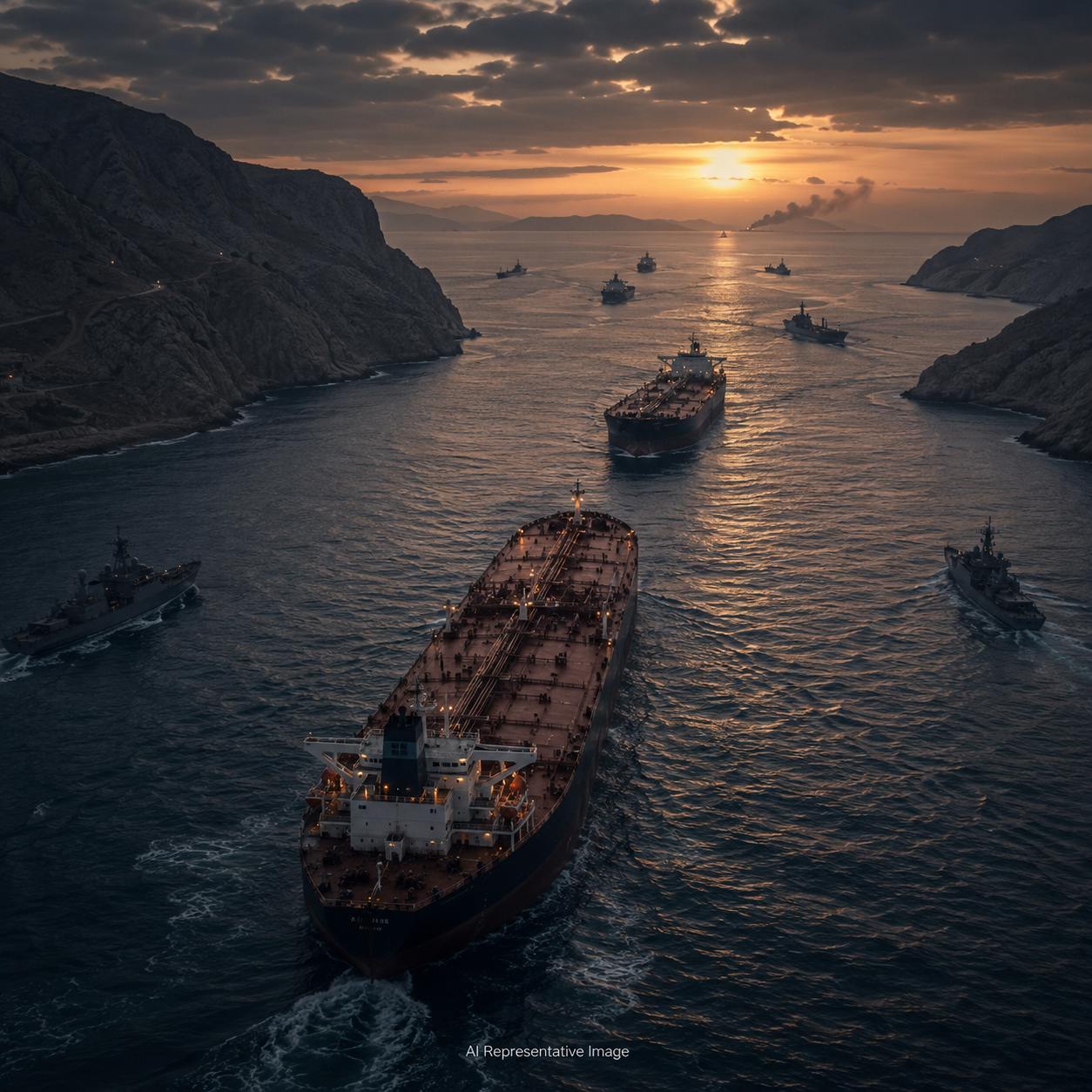
India Is No Longer a Distant Observer
For India, this conflict is becoming increasingly personal. India imports a significant share of its energy through these waters. Thousands of Indian seafarers serve aboard commercial vessels operating across the Middle East.
Indian-owned and India-bound ships regularly transit both Hormuz and Bab el-Mandeb. Recent attacks affecting commercial vessels with Indian crew members illustrate that geography alone no longer guarantees distance from conflict.
Every missile fired towards a merchant vessel, every disruption in maritime traffic and every increase in shipping insurance costs ultimately affects India's economy. This is no longer simply a Middle Eastern security issue. It is an Indian strategic concern.
The New Maritime Chessboard
The world's attention often focuses on individual chokepoints. The reality is becoming far more interconnected. The Strait of Hormuz, Bab el-Mandeb, The Red Sea, The Suez Canal and The Arabian Sea: together they form one continuous maritime network through which energy, trade and global commerce flow. Disruption at one point increases pressure on the others. The current conflict demonstrates that controlling these sea lanes has become as strategically important as controlling territory on land. Modern geopolitics is increasingly being written at sea.