The meeting took place against the backdrop of tensions in the Middle East, negotiations involving the United States and Iran, concerns over maritime security and a rapidly evolving global economic landscape.
One of the notable moments of the summit came from Prime Minister Modi's remarks on trust in international relations. Referring to former U.S. President Ronald Reagan's famous phrase, Modi emphasized that trust must be accompanied by verification and accountability. The statement resonated beyond diplomacy. In an era marked by conflicts, sanctions, competing narratives and shifting alliances, the message reflected a growing global concern that trust must be earned and sustained through actions rather than assumptions.
The bilateral meeting between Modi and Trump also occurred after months of significant developments. Discussions reportedly covered trade, security, energy cooperation and developments in West Asia.
India also used the summit to raise an issue of immediate national importance: the safety of Indian seafarers and maritime security. Following the deaths of Indian nationals in the Gulf region, India highlighted the importance of secure shipping routes and the protection of civilian maritime personnel. For a country whose trade and energy security depend heavily on maritime connectivity, the issue carries both economic and strategic significance.
G7 2026: More Than a Meeting, A Reflection of India's Growing Strategic Weight
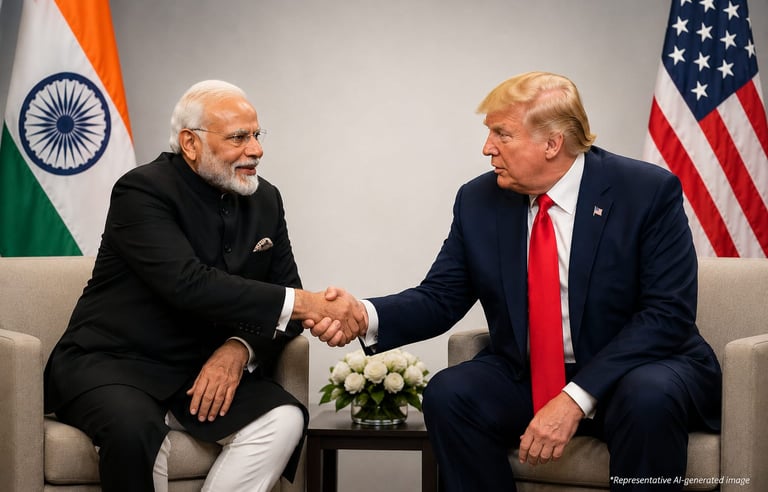
Prime Minister Narendra Modi's meeting with U.S. President Donald Trump at the G7 Summit attracted significant global attention. It was their first face-to-face meeting in nearly one and a half years, a period during which India-U.S. relations witnessed both cooperation and friction over trade, regional conflicts, diplomatic messaging and geopolitical developments.
Another development that attracted attention was the U.S. decision to revert the name of the Indo-Pacific Command to Pacific Command. While American officials described the move as administrative, the timing generated discussion because the Indo-Pacific framework has, over the past decade, become closely associated with India's growing strategic role in the region. Taken individually, each of these developments may appear unrelated. Viewed together, however, they reveal a broader trend.
India's participation at the G7 was not defined by a single handshake, a single announcement or a single headline. Instead, it highlighted the increasingly complex role India is playing in global affairs.
India is negotiating and implementing major trade agreements. It is raising concerns about the safety of its citizens abroad. It is engaging with the United States while preserving strategic autonomy. It is strengthening ties with Europe while maintaining relationships across multiple geopolitical centres.
The significance of the summit therefore lies not merely in what was announced, but in what it revealed.
India is increasingly approaching global diplomacy not as a country seeking validation from major powers, but as a nation pursuing its own interests in a rapidly changing international order. Whether the issue is trade, maritime security, strategic partnerships or global governance, New Delhi's focus remains on advancing Indian interests while navigating an increasingly complex world.
Beyond the bilateral meeting, the G7 summit highlighted how India has become an increasingly influential voice in shaping discussions on security, trade, and global stability.
By Abhinav Mudaliar
Chief Analyst, The Centre
18 June 2026 • 6:02 AM IST • 5 min read
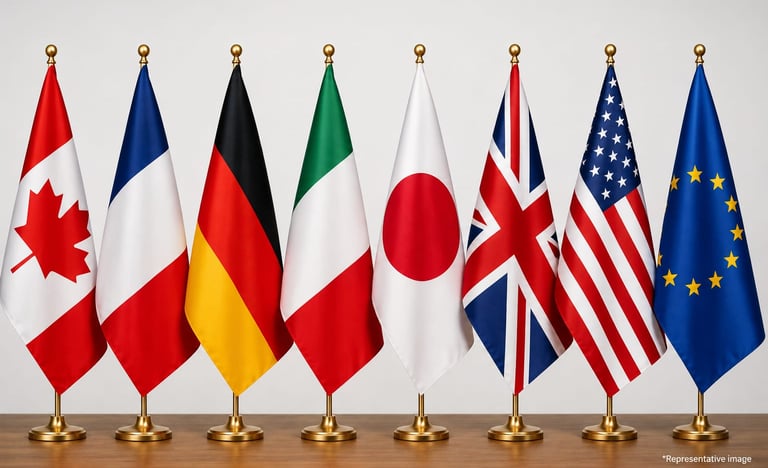
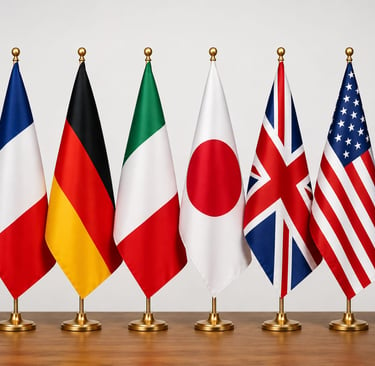
Beyond security, the summit highlighted India's expanding economic partnerships.
India and the United Kingdom moved closer to implementing their trade agreement, a development expected to strengthen commercial ties between the two countries and provide greater market access for businesses and professionals.
At the same time, India and the European Union continued to deepen a relationship that was significantly strengthened in January 2026, when both sides concluded a landmark Free Trade Agreement after nearly two decades of negotiations. The agreement, described by European Commission President Ursula von der Leyen as the "mother of all deals," elevated the relationship beyond economics into areas such as security, defence and broader strategic cooperation.