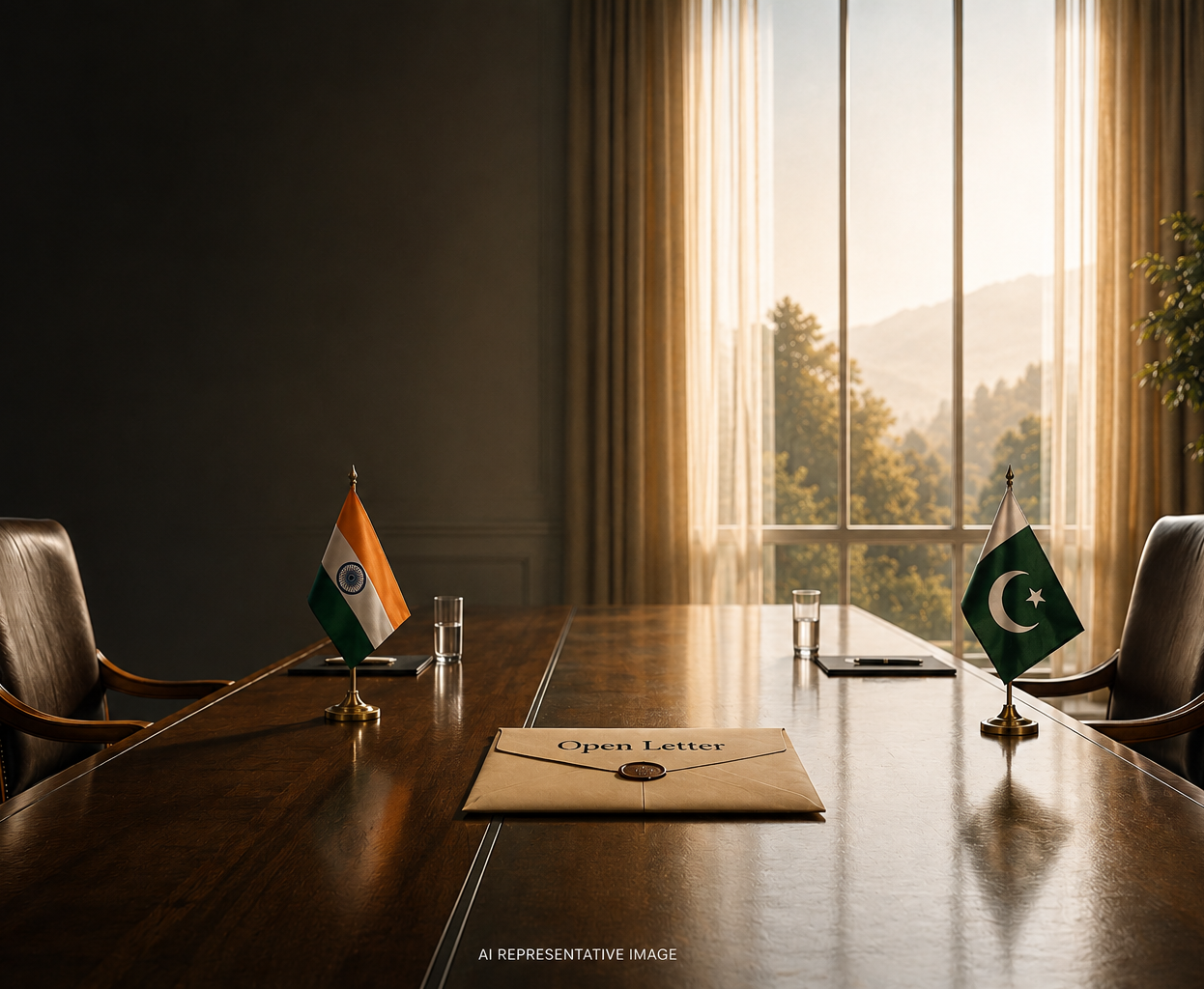
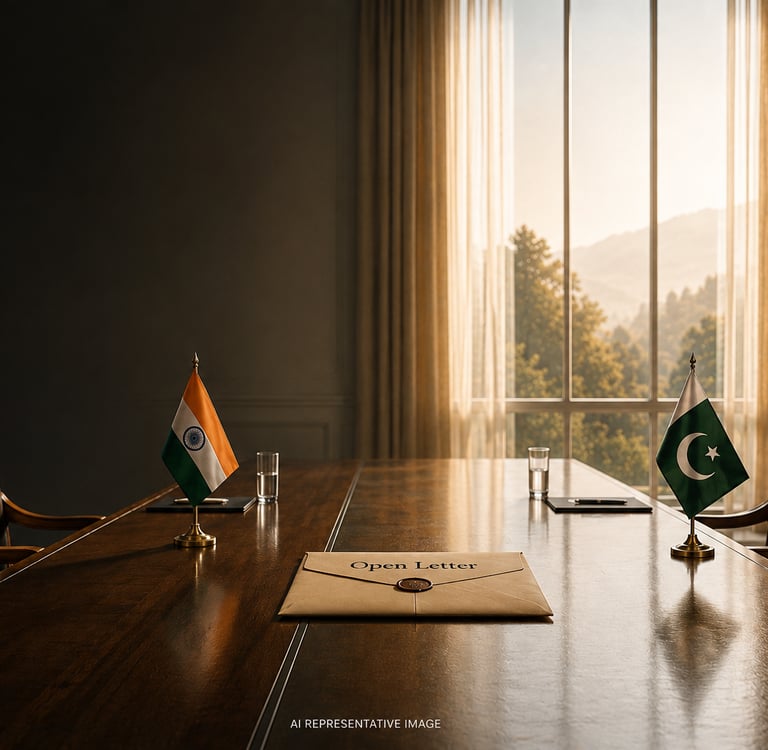
That is why open letters rarely change foreign policy overnight. Their value lies elsewhere. They reveal what a section of society believes should happen, even when governments are unwilling to move. It is against this backdrop that 116 politicians, former diplomats, retired officials and civil society leaders from India and Pakistan have jointly appealed to Prime Minister Narendra Modi and Prime Minister Shehbaz Sharif to resume diplomatic engagement after years of strained relations.
A Familiar Demand, A Different Moment
The demands contained in the letter are hardly revolutionary. The signatories have called for the restoration of High Commissioners in New Delhi and Islamabad, the resumption of visa services, revival of bilateral trade, reopening of communication channels and greater people-to-people exchanges. They have also urged both governments to resume dialogue on all outstanding bilateral issues. These proposals have surfaced before in different forms. What makes this initiative noteworthy is not what it asks for, but who is asking and when.
An open letter signed by 116 politicians, former diplomats and public figures from India and Pakistan has urged both governments to restore dialogue. Whether diplomacy follows, however, will depend less on goodwill than on strategic calculations.
By Abhinav Mudaliar
Chief Analyst, The Centre
02 July 2026 • 9:00 PM IST • 7 min read
Diplomacy has an unusual paradox. Everyone praises it in principle, yet governments usually embrace it only when they believe it serves their interests. Peace may be the objective, but national interest remains the currency.
The Silence Between Two Neighbours
India and Pakistan have spent much of the last decade communicating more through official statements than through sustained diplomatic engagement. The reasons are well known. Terrorism, border tensions, political mistrust and competing strategic priorities have steadily narrowed the space for dialogue. As trust declined, diplomacy gradually gave way to deterrence. In such an environment, even a conversation begins to look like a concession.
The Limits of Civil Society
History offers a sobering lesson. Governments rarely alter foreign policy because intellectuals, former diplomats or public figures ask them to. States respond to changes in security, economics and strategic incentives far more readily than to public appeals. That does not make such initiatives meaningless.
Civil society cannot negotiate treaties. It cannot reopen embassies or restore trade. What it can do is keep alive the idea that diplomacy remains an option, even when politics appears determined to close every door.
The Indian Reality
New Delhi has consistently maintained that meaningful dialogue cannot proceed alongside cross-border terrorism. That position has shaped India's Pakistan policy for years and continues to enjoy broad political support. Unless that fundamental concern changes, the prospects of any immediate diplomatic breakthrough remain limited regardless of how many signatures an open letter gathers. Foreign policy, after all, is rarely written through sentiment. It is written through security calculations.
More Symbolism Than Breakthrough
The letter is unlikely to produce an immediate policy shift in either capital. Yet dismissing it entirely would also miss the point. Its significance lies less in the expectation of restarting dialogue tomorrow and more in demonstrating that voices on both sides continue to argue that prolonged disengagement cannot become a permanent substitute for diplomacy. Whether governments agree is another matter. Because in international relations, dialogue does not begin when societies ask for it. It begins when governments conclude that talking has become more advantageous than remaining silent.