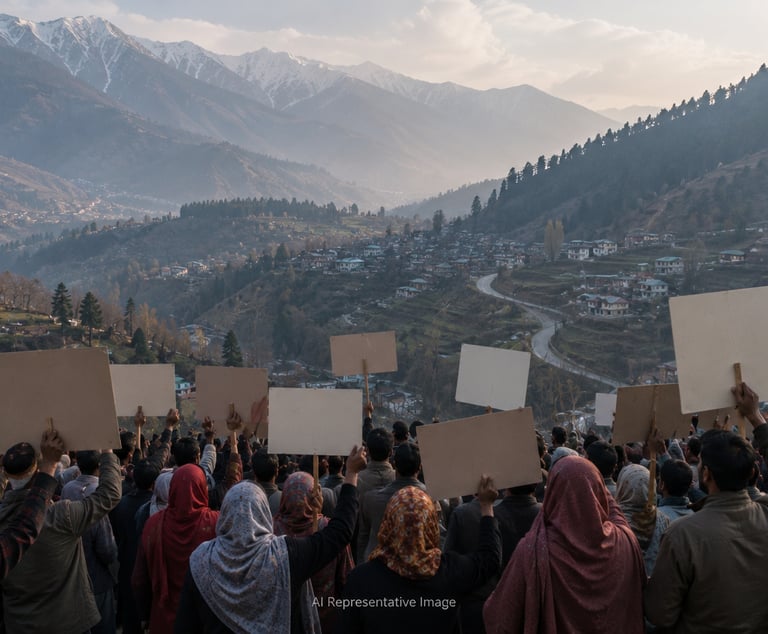
Some protest leaders have openly appealed to India for help. The appeals have generated discussion across India. But they also raise a fundamental question that goes beyond the immediate crisis. What can India actually do?
India's Position Has Remained Unchanged
India's official position has remained consistent for decades. New Delhi maintains that the entire former princely state of Jammu and Kashmir, including Pakistan occupied Kashmir and Gilgit Baltistan, is an integral part of India. This position was reaffirmed in 1994, when both Houses of the Indian Parliament unanimously passed a resolution declaring that these territories belong to India and calling upon Pakistan to vacate them. From India's constitutional perspective, there has been no ambiguity. The dispute has never been about India's claim. It has always been about control.
Humanitarian Support and Political Intervention Are Different
Appealing for humanitarian assistance is one thing. Expecting another country to intervene politically or militarily is something entirely different. If people in Pakistan occupied Kashmir are asking India to highlight their plight internationally or provide humanitarian assistance where possible, those are issues that can be discussed through diplomatic and humanitarian channels. However, stronger forms of intervention would carry profound legal, diplomatic and military consequences. Any such action would affect regional stability and would not be based solely on public appeals made during protests.
As demonstrations intensify across Pakistan occupied Kashmir, some protesters have publicly appealed to India for assistance. But beyond humanitarian concern, what options does New Delhi realistically possess, and what would fundamentally change the equation?
By Abhinav Mudaliar
Chief Analyst, The Centre
08 July 2026 • 8:30 PM IST • 6 min read
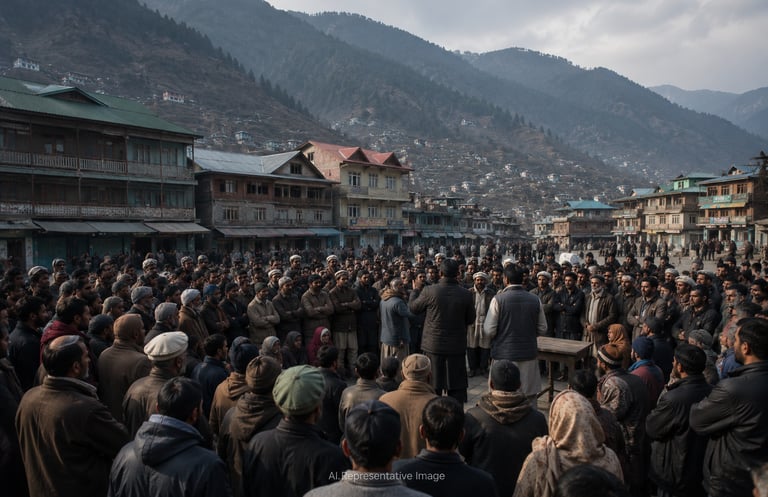
For several days, Pakistan occupied Kashmir has witnessed one of its most significant waves of public unrest in recent years. Protesters have accused Islamabad of political repression, economic neglect and heavy handed policing. The demonstrations have drawn attention not only because of their scale but also because of something far more unusual.
The Question of Political Identity
The current protests appear to focus primarily on governance, economic hardship and allegations of political repression. What has not emerged as a clear and unified demand is a declaration that the people wish to become part of India.
That distinction matters. If a movement seeks humanitarian relief, it is making one kind of request. If it seeks political integration with another country, it is making an entirely different one.
At present, there is no evidence that the protest movement as a whole has formally adopted such a position. Different groups and individuals have expressed different views, and the movement itself remains driven by multiple grievances.
Would That Change India's Options?
Some analysts argue that if a broad and representative political movement in Pakistan occupied Kashmir were to openly identify itself with India and seek integration, New Delhi's diplomatic position could become stronger.
Others contend that even such a development would not automatically change the legal and geopolitical realities, given the international dimensions of the Kashmir dispute and the risks of escalation between two nuclear armed neighbours. The debate therefore is not simply about what India claims. It is also about what India can realistically do without triggering wider consequences.
Beyond the Protests
The unrest in Pakistan occupied Kashmir is significant regardless of where one stands politically. It reflects growing dissatisfaction within a region that has long remained outside international attention except during periods of military tension between India and Pakistan. Whether these protests evolve into a broader political movement or remain centred on governance and economic grievances will determine their long term significance.
Beyond the Headlines
The most important question may not be whether protesters have asked India for help. The more important question is what kind of help they are actually seeking. Humanitarian support, diplomatic advocacy, political backing and territorial integration are not the same thing. Each carries different implications, different responsibilities and different consequences. As events continue to unfold, the future of Pakistan occupied Kashmir may depend not only on Islamabad's response, but also on how the people of the region define their own political aspirations.