Yet beneath the competing declarations of victory lies a more complicated reality. Both Washington and Tehran entered this crisis seeking what strategists call a zero-sum outcome, a situation in which one side wins and the other loses.
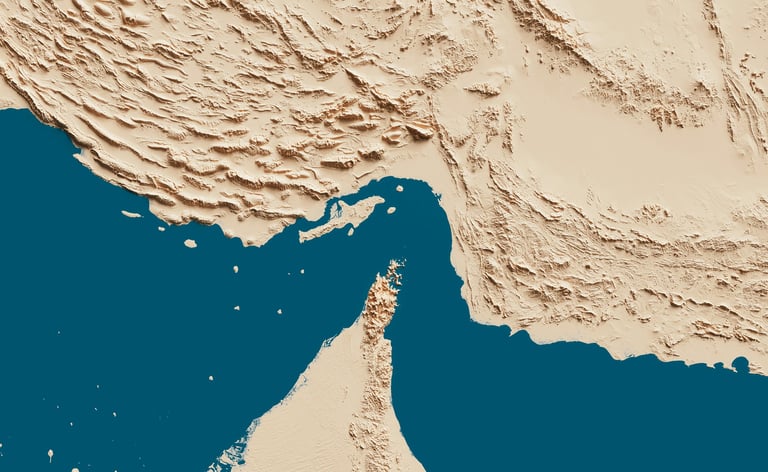
The United States sought guarantees regarding Iran's nuclear ambitions, regional activities and the security of global energy routes. Iran, meanwhile, aimed to preserve its sovereignty, secure economic relief and avoid appearing to have capitulated under military and economic pressure. Now, as both governments prepare their domestic audiences for an agreement, each is emphasizing its own achievements. For Washington, the reopening of the Strait of Hormuz and renewed diplomatic engagement are being presented as signs that pressure worked.
U.S.–Iran Deal: A Beginning, an Intermission, or History Repeating Itself?
After weeks of conflict, diplomatic manoeuvring and uncertainty surrounding the Strait of Hormuz, the United States and Iran now appear closer than ever to formalising an agreement that both sides are portraying as a victory. American President Donald Trump has suggested that the deal represents a triumph of strength and diplomacy, while Iranian officials and media outlets have projected the outcome as evidence that Tehran resisted pressure without surrendering its core interests.
At the time, the agreement was hailed by supporters as a major step towards reducing the risk of conflict. Yet critics argued that the deal had serious shortcomings.
Donald Trump, during his first presidency, withdrew the United States from the JCPOA in 2018, describing it as a "one-sided" arrangement. His administration maintained that the agreement failed to adequately address Iran's ballistic missile programme, regional activities and what it viewed as temporary rather than permanent restrictions on Tehran's nuclear ambitions.
Iran rejected those criticisms and argued that it had fulfilled its obligations under the agreement while the United States had abandoned an internationally recognised framework. The collapse of the JCPOA serves as an important reminder today.
Diplomatic agreements are not sustained merely by signatures. They require political will, institutional continuity and a degree of trust between adversaries who often possess very little of it. That is why even if a new agreement is formally signed, it would be premature to describe it as the end of the U.S.–Iran conflict.
Too many underlying issues remain unresolved. Questions surrounding Iran's long-term nuclear trajectory, regional influence, sanctions relief and future American administrations will continue to shape the relationship. Perhaps the most realistic way to view the current moment is neither as a historic breakthrough nor as an inevitable failure.
It is an intermission. The guns may have fallen silent, and diplomats may have returned to the negotiating table, but the structural disagreements that have defined U.S.–Iran relations for decades have not disappeared. History suggests that peace in the Middle East is rarely a single event.
More often, it is a process marked by pauses, setbacks and renewed attempts at accommodation. Whether this agreement becomes the foundation of a more stable regional order or simply another chapter in a recurring cycle of confrontation remains to be seen.
For now, the world is witnessing not necessarily the end of the story, but the beginning of its next act.
From the JCPOA to the present negotiations, the path between diplomacy and distrust has rarely been linear. This agreement may prove to be a beginning or simply an intermission.
By Abhinav Mudaliar
Chief Analyst, The Centre
16 June 2026 • 12:05 PM IST • 6 min read
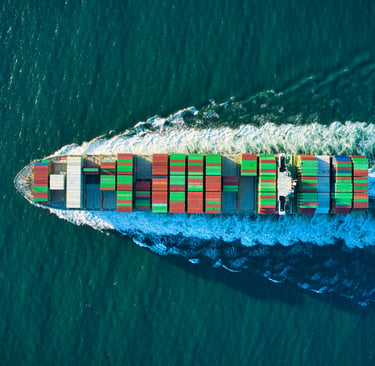
For Tehran, the fact that negotiations occurred without regime change or outright military defeat is being framed as proof of resilience. However, this is not the first time the United States and Iran have arrived at such a moment.
In 2015, Iran and six world powers signed the Joint Comprehensive Plan of Action (JCPOA), one of the most significant diplomatic agreements in recent Middle Eastern history.
Under the JCPOA, Iran agreed to substantial restrictions on its nuclear programme. Uranium enrichment levels were capped, centrifuge numbers were reduced and inspections by the International Atomic Energy Agency (IAEA) were expanded. In return, international sanctions on Iran were eased.