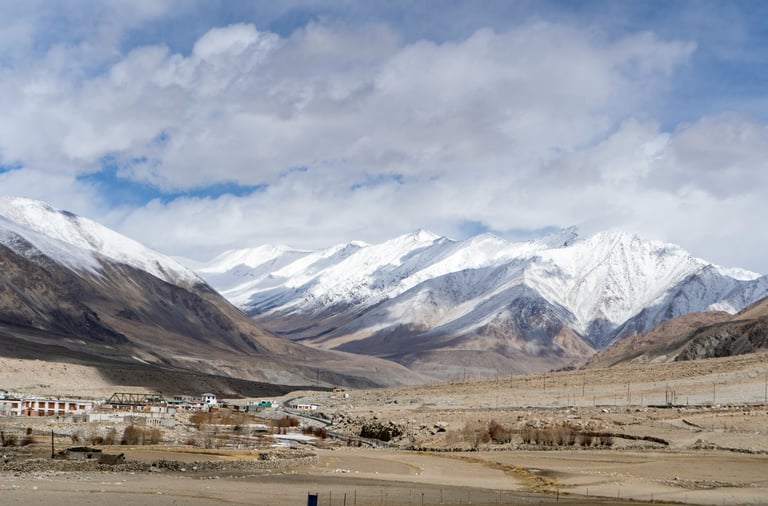
It remains one of the defining military victories in independent India's history, not merely because territory was recovered, but because it demonstrated extraordinary courage under impossible conditions. Every Kargil Vijay Diwas rightly honours those who fought and those who never returned. Their sacrifice deserves remembrance beyond ceremonies and speeches. Yet the true legacy of Kargil lies not only in honouring the past, but in preparing for the future. The greatest tribute any nation can pay to its fallen soldiers is ensuring that the lessons learned through their sacrifice are never forgotten. Kargil was the last major conventional conflict India fought under circumstances that now seem almost simple compared to today's strategic environment. The mountains remain where they were, but the battlefield has expanded beyond them.
Kargil Changed More Than India's Borders
Operation Vijay exposed uncomfortable truths. It revealed gaps in intelligence, highlighted weaknesses in surveillance, demonstrated the importance of logistical preparedness in high-altitude warfare and underscored the necessity of better coordination among India's armed forces. Perhaps equally significant was India's political restraint. Despite Pakistan's role in orchestrating the intrusion, India chose not to expand the conflict across the international border. That decision strengthened India's diplomatic position and reinforced its image as a responsible power. The war became a turning point. Over the following years, India invested heavily in border infrastructure, surveillance systems, intelligence coordination, precision weaponry and military modernisation. Roads reached previously inaccessible regions. Airlift capabilities improved. Surveillance technologies became more sophisticated. Defence planning gradually shifted from reacting to crises towards anticipating them. Yet history rarely repeats itself in the same form. The next conflict is unlikely to resemble Kargil.
A Security Environment That Has Fundamentally Changed
The India of 2026 is strategically very different from the India of 1999. Economic growth has expanded national interests far beyond territorial defence. India's trade routes stretch across the Indian Ocean. Its financial system is deeply interconnected with the global economy. Digital infrastructure powers everything from banking and healthcare to governance and military communications. Satellites enable navigation, weather forecasting, communications and intelligence. Artificial intelligence is beginning to reshape both civilian and military decision-making. National security is no longer confined to defending physical borders. It now involves protecting data, infrastructure, supply chains, communication networks, financial institutions and technological ecosystems. The battlefield has become multidimensional.
Pakistan: The Immediate Security Challenge
More than two decades after Kargil, Pakistan continues to pose India's most immediate security challenge. The nature of that challenge, however, has evolved. Conventional military confrontation has increasingly been supplemented by asymmetric tactics. Cross-border terrorism, proxy organisations, drone-based infiltration, narcotics trafficking and attempts to destabilise border regions remain persistent concerns. Pakistan's military establishment continues to view proxy warfare as a relatively inexpensive means of imposing costs on India while avoiding full-scale conventional conflict. The presence of tactical nuclear weapons further complicates escalation dynamics, creating a security environment where even limited confrontations require careful strategic calibration.
At the same time, India's own capabilities have expanded considerably. Improved surveillance, stronger border infrastructure, enhanced intelligence coordination and rapid-response capabilities have made infiltration significantly more difficult than it once was. The balance has shifted. Pakistan remains capable of creating instability, but its ability to fundamentally alter the strategic balance has become increasingly constrained.
Twenty-seven years after Operation Vijay, India confronts a security landscape that extends far beyond the icy peaks of Kargil. The country has strengthened its military and strategic capabilities since 1999, but the nature of conflict has also transformed. Today, India's security is shaped not only by soldiers on its borders, but by satellites in orbit, cyber networks, artificial intelligence, maritime competition and the battle for information.
By Abhinav Mudaliar
Chief Analyst, The Centre
26 July 2026 • 10:10 PM IST • 9 min read
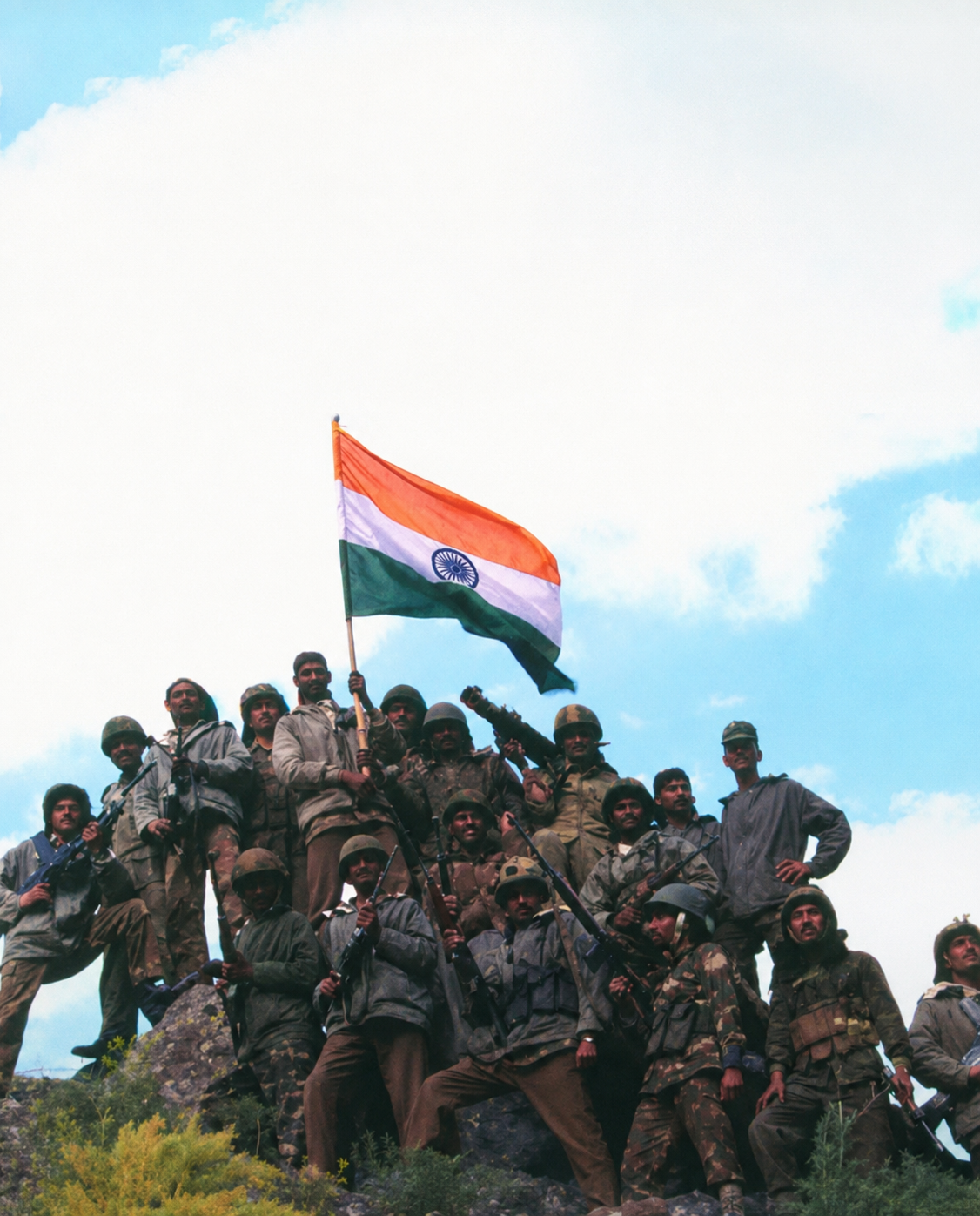
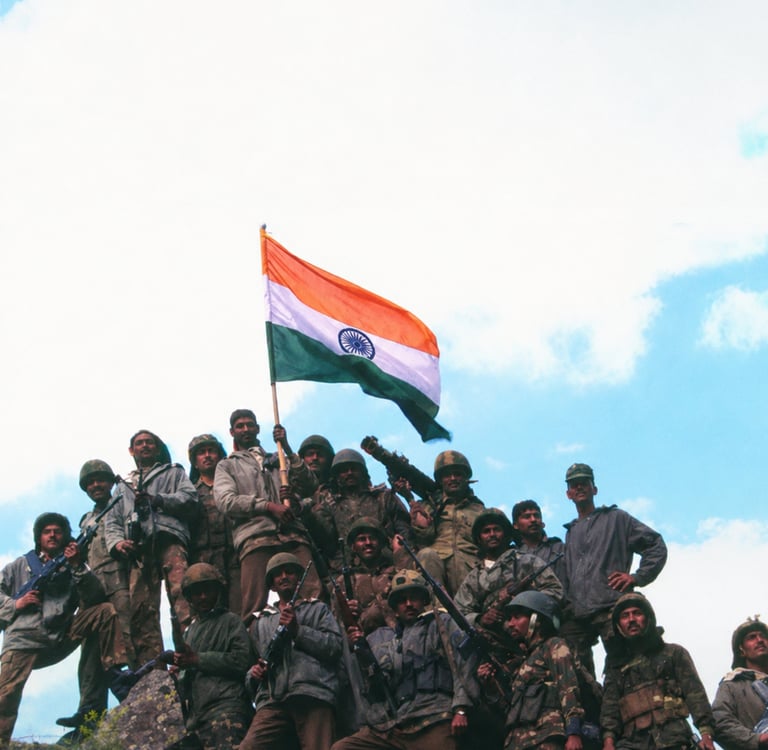
On 26 July 1999, India declared the successful completion of Operation Vijay. After nearly three months of intense fighting in some of the world's most inhospitable terrain, Indian soldiers had reclaimed every major position occupied by Pakistani Army along the Kargil sector.
China: A Broader Strategic Competition
If Pakistan represents India's immediate security challenge, China represents its most consequential long-term strategic competitor. Unlike Pakistan, the competition with China extends well beyond military confrontation. It encompasses infrastructure, manufacturing, technology, maritime influence, space capabilities, cyber operations, economic resilience and geopolitical influence across Asia.
The clashes along the Line of Actual Control demonstrated that peace along the border can no longer be assumed. Simultaneously, China's rapid naval expansion and growing presence in the Indian Ocean have introduced new dimensions to India's strategic calculations. Competition with China is therefore not simply about defending territory. It is about maintaining strategic balance across multiple domains for decades to come.
The Challenge of Two Fronts
Indian defence planners have long considered the possibility of simultaneous pressure from both Pakistan and China. The strategic partnership between Beijing and Islamabad has deepened over the years through economic cooperation, military collaboration and diplomatic coordination. While this does not automatically imply coordinated military action, it requires India to prepare for scenarios involving concurrent crises. Preparedness should never be mistaken for prediction. Responsible nations plan for possibilities long before they become realities.
Cyber Warfare: The Battlefield Without Borders
The first strike in tomorrow's conflict may not come from a fighter aircraft or an artillery battery. It may arrive as malicious software. Modern societies depend upon interconnected digital systems. Electricity grids, banking networks, telecommunications, transportation systems, healthcare infrastructure and government databases all represent potential targets. A successful cyber attack could disrupt financial markets, interrupt emergency services, disable communications or undermine public confidence without a single soldier crossing a border.
Artificial intelligence is making these capabilities more sophisticated. Automated vulnerability discovery, AI-assisted malware and increasingly complex cyber espionage campaigns are changing the nature of digital conflict. Building cyber resilience has therefore become as important as building military strength.
Space: The New Strategic Frontier
For decades, outer space was primarily viewed as a scientific endeavour. Today, it has become an operational military domain. Modern armed forces depend extensively upon satellites for navigation, secure communications, surveillance, weather forecasting and precision targeting. Disrupting those capabilities can significantly degrade military effectiveness without directly engaging ground forces. Around the world, major powers are investing heavily in anti-satellite technologies, space surveillance and resilient satellite constellations.
India has recognised this changing reality. Its expanding space capabilities, combined with growing emphasis on space security, reflect an understanding that national defence now extends hundreds of kilometres above the Earth's surface. The battlefield has quite literally moved beyond the planet.
Information Warfare and Artificial Intelligence
Wars are no longer fought solely for territory. They are increasingly fought for perception. Disinformation campaigns, deepfakes, coordinated influence operations and manipulated social media narratives have become instruments of strategic competition. Their objective is not necessarily military victory but political confusion, public distrust and social fragmentation. Artificial intelligence amplifies both opportunity and risk. It enhances intelligence analysis, improves logistics and supports military decision-making. Yet it also enables more convincing disinformation, autonomous systems and faster cyber attacks. Managing these technologies responsibly may become as important as developing them.
Maritime Security: Protecting India's Economic Lifelines
India's strategic geography extends far beyond the Himalayas. Nearly all of its trade by volume and a significant share of its energy imports travel by sea. The Indian Ocean, the Arabian Sea and the Bay of Bengal have become central to India's economic security. Critical maritime choke points, including the Strait of Hormuz and the Strait of Malacca, carry consequences far beyond regional politics. Any disruption could directly affect India's energy supplies, trade flows and economic stability. This explains India's growing investment in naval modernisation, maritime domain awareness and partnerships across the Indo-Pacific. Economic security increasingly depends upon maritime security.
Internal Security: The Foundation of National Strength
No country can project strength externally if it remains vulnerable internally. Counter-terrorism, border management, organised crime, illegal trafficking and protection of critical infrastructure remain essential components of national security. Equally important is societal resilience. Democratic institutions, effective governance, disaster preparedness, public trust and social cohesion all contribute to a nation's ability to withstand crises. Military strength alone cannot guarantee national security. Strong institutions are equally indispensable.
How India Has Changed Since Kargil
The transformation since 1999 is substantial. Border infrastructure has improved dramatically. Surveillance capabilities have expanded through drones, satellites and advanced sensors. The induction of modern fighter aircraft, improved missile systems, stronger air defence networks and increasing emphasis on indigenous defence manufacturing have enhanced India's military capabilities. Intelligence coordination has improved. Defence diplomacy has expanded. India's partnerships with major powers have diversified strategic options while preserving decision-making autonomy. None of this suggests that the journey is complete.
Theatre command reforms continue to evolve. Defence procurement still requires greater efficiency. Indigenous technological capability must continue expanding, particularly in advanced propulsion, semiconductors, artificial intelligence and next-generation defence systems. Confidence should never become complacency. National security is not an achievement that can be permanently completed. It is a continuous process of adaptation.
The Next War Will Not Look Like Kargil
History often tempts nations to prepare for the last war rather than the next one. Kargil was fought across mountain ridges with artillery, infantry and air power. Tomorrow's conflict may begin with cyber attacks on critical infrastructure, disruption of satellite communications, economic coercion, drone swarms, electronic warfare and coordinated information campaigns. Conventional military operations may still occur, but they will likely be only one part of a much broader contest. Victory will depend not only upon military strength but also technological innovation, industrial capacity, resilient institutions and an informed society capable of resisting disruption. The definition of national power has expanded. So has the definition of national security.
Beyond the Headlines
Kargil Vijay Diwas is, first and foremost, a day of remembrance. It honours extraordinary soldiers who displayed courage that continues to inspire generations of Indians. But remembrance carries responsibility. Their legacy demands more than ceremonies. It demands continuous preparedness, strategic foresight and an honest assessment of emerging challenges. India today is stronger, more capable and better prepared than it was in 1999. That progress deserves recognition.Yet the character of conflict continues to evolve, and so must the nation's response.
The greatest lesson of Kargil is not simply that India can win wars when challenged. It is that security can never be taken for granted. Every generation inherits new threats, new technologies and new responsibilities. The mountains of Kargil will always remind India of the price of freedom. The challenge now is ensuring that the nation remains prepared to defend that freedom, whether the next battlefield lies on a glacier, beneath the ocean, inside a computer network or among the satellites orbiting above us. The legacy of Kargil is not only victory. It is vigilance.