
Countries such as Spain, Italy, Greece, Portugal and parts of France are witnessing prolonged heatwaves that would once have been considered extraordinary. The question is no longer whether Europe will experience another extreme summer. The question is how often such summers will become the norm.
A Climate That Is Changing Before Our Eyes
Heatwaves are among the clearest reminders that climate change is no longer a distant scientific prediction. They are unfolding in real time. Scientists have repeatedly warned that rising greenhouse gas emissions are increasing global temperatures, making extreme weather events more frequent and more intense. Europe, despite its relatively temperate climate, is warming faster than many expected. Dry soils, changing atmospheric circulation and recurring droughts are amplifying the intensity of summer heat. What was once described as a "once-in-a-generation" event is gradually becoming a recurring seasonal challenge.
Beyond Discomfort
Extreme heat is far more than an inconvenience. Higher temperatures place enormous pressure on public health systems, particularly affecting the elderly, children and people with existing medical conditions. Heat also reduces agricultural productivity, strains water resources and increases the risk of wildfires. Cities face an additional challenge. Concrete buildings, asphalt roads and dense urban development absorb heat during the day and release it slowly at night, creating the urban heat island effect. As a result, cities often remain significantly warmer than surrounding rural areas, leaving residents with little relief even after sunset.


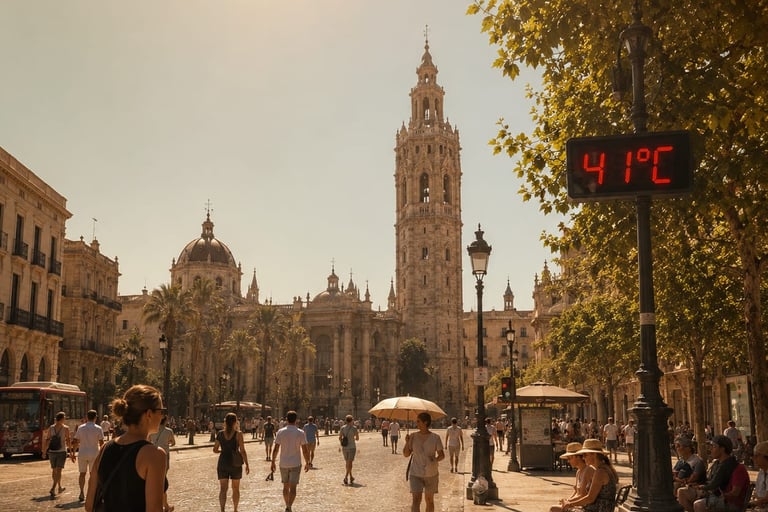
There was a time when Europe was associated with pleasant summers, mild evenings and a climate that rarely demanded survival strategies. Today, that image is steadily fading. Across large parts of the continent, temperatures exceeding 40°C are no longer isolated events.
Temperatures crossing 40°C were once considered exceptional across much of Europe. Today, they are becoming increasingly frequent, raising difficult questions about climate change, preparedness and the future of life on the continent.
By Mrs. Rama Mudaliar
Analyst, Environment & Natural Systems
02 July 2026 • 11:45 PM IST • 5 min read
The Cost of Staying Cool
One immediate response to rising temperatures is increased dependence on air conditioning. While air conditioners provide relief and save lives during extreme heat, their growing use also raises electricity demand. In countries where power generation still depends heavily on fossil fuels, higher electricity consumption can contribute to additional greenhouse gas emissions, creating a cycle that further intensifies global warming. Cooling our homes must not come at the cost of heating the planet even more.
Adapting to a Hotter Future
Europe's experience offers lessons for every nation. Expanding urban green spaces, planting more trees, improving building design, protecting water resources and investing in renewable energy are no longer optional environmental goals—they are practical necessities.
Governments must strengthen early warning systems for heatwaves, while cities need infrastructure capable of protecting vulnerable populations from prolonged periods of extreme heat. Individual choices also matter. Conserving energy, reducing unnecessary emissions and supporting sustainable lifestyles collectively contribute to slowing climate change.
A Shared Responsibility
Climate change does not recognise borders. A heatwave in Europe is not merely Europe's problem. It is another reminder that the atmosphere is shared by everyone. The causes may be global, but the consequences are increasingly local. The challenge before humanity is not simply learning how to endure hotter summers. It is ensuring that future generations inherit a planet where summers remain seasons to be enjoyed, not disasters to be survived.