
On 5 August 2019, the Union Government abrogated Article 370, fundamentally altering Jammu and Kashmir's constitutional relationship with the Union of India. One year later, on 5 August 2020, Prime Minister Narendra Modi performed the Bhoomi Pujan for the Ram Mandir in Ayodhya, another milestone that had occupied India's political discourse for decades. Whether one supports or opposes these decisions, both represented structural shifts rather than routine governance. Since then, 5 August has become more than an anniversary. It has become a date that invites political expectation.
The Modi–Shah Model of Governance
One of the defining characteristics of the Modi government's decision-making has been its preference for strategic surprise. Major initiatives have often remained closely guarded until their official announcement. More importantly, many of them have sought to reshape institutions rather than simply introduce incremental policy changes. This has created a perception that when the government chooses politically significant dates, it is often thinking beyond immediate headlines and towards long-term political messaging. That perception explains why every approaching 5 August generates intense discussion across political circles.
What Could Be Next?
This year's speculation ranges across several possibilities. Some discussions centre on a cabinet reshuffle, particularly as governments periodically recalibrate ministerial responsibilities ahead of important political and administrative phases. Others point towards longer-term structural reforms that have remained part of the government's public agenda. These include delimitation, the eventual implementation of the Women's Reservation Act, the proposal for One Nation, One Election, and discussions surrounding a Uniform Civil Code.
Each of these would significantly influence India's constitutional, electoral or administrative framework. At the same time, each involves legal, political and procedural complexities that extend well beyond a single announcement. Whether any of these developments materialise this week remains uncertain.
Since 2019, 5 August has evolved from a calendar date into a symbol of transformational governance. From the abrogation of Article 370 to the Ram Mandir Bhoomi Pujan, it has become associated with some of the Modi government's defining political decisions. As another anniversary approaches, speculation is once again growing, not necessarily because an announcement is certain, but because the date itself has acquired extraordinary political significance.
By Abhinav Mudaliar
Chief Analyst, The Centre
02 August 2026 • 08:05 PM IST • 6 min read

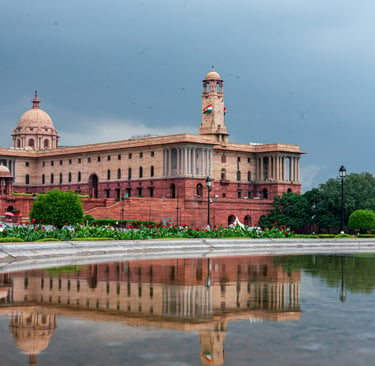
Few dates in contemporary Indian politics carry the symbolic weight of 5 August.
Why Timing Matters
Governments rarely choose the timing of major announcements randomly. Political symbolism, parliamentary calendars, electoral strategy, administrative preparedness and public messaging all influence when significant decisions are unveiled.
Dates themselves do not create policy. They amplify its political meaning. That is why anniversaries such as 5 August naturally become focal points for speculation, particularly when associated with a government known for tightly controlled decision-making.
Beyond the Rumours
Speculation is an inevitable part of politics. Some rumours prove accurate. Many do not. But focusing exclusively on what may or may not be announced risks missing the larger story. India is in the midst of a period of institutional and political transformation. Questions surrounding electoral reform, representation, governance, constitutional design and administrative restructuring are likely to shape public debate for years to come.
Whether the next major reform arrives on 5 August or another date is ultimately secondary. The more important reality is that structural change has become a defining feature of contemporary Indian politics.
Beyond 5 August
The significance of 5 August no longer lies only in what happened in 2019 or 2020. It lies in how those moments transformed public expectations. Every year, as the date approaches, political observers ask the same question: What comes next? Perhaps the answer will come this year. Perhaps it will not. But one thing is increasingly clear. In the Modi era, some dates have evolved beyond anniversaries. They have become political milestones against which the future itself is measured.